Introduction
A competitive quotation and a good looking sample are useful starting points when sourcing HVAC service tools. They do not answer every question that matters after an order is packed and shipped. Importers also need to know which specification was approved, who controls production changes, how inspection results are recorded, and what happens if the received goods differ from the sample.
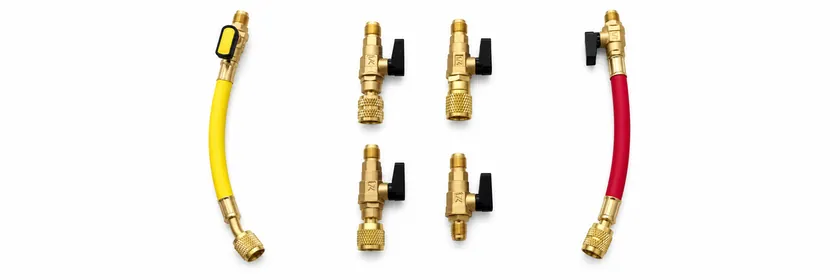
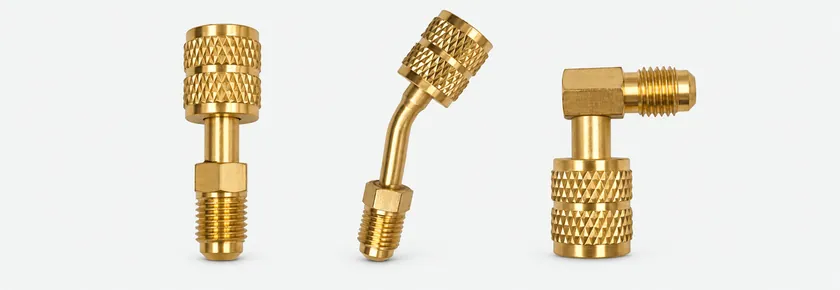
These issues apply to refrigerant charging hoses, brass adapters, ball valves, quick couplers, and related service tools. A small change in a connector, seal, or label can create a large commercial problem if it reaches a distributor’s inventory unnoticed.
This guide provides a supplier evaluation framework for overseas buyers. It covers business verification, factory capability, sample approval, testing evidence, shipment inspection, OEM packaging, and reorder control. The examples are illustrative purchasing scenarios, not claims about completed HW projects, factory audits, or measured customer results.
What should you verify before placing a bulk order
Verify the supplier’s business identity, define the exact product specification, approve a traceable sample, agree on inspection and test records, confirm packaging and shipping responsibilities, and establish a process for product changes and complaints. Treat factory claims and certificates as evidence to verify rather than promises to repeat.
A useful evaluation should reduce uncertainty at specific decision points. It should tell a buyer whether to request clarification, approve a trial order, require additional testing, or stop the purchase. A long questionnaire with no acceptance criteria is less useful than a short record of the risks that could affect the customer.
Start with business identity and production responsibility
Confirm the legal entity that will issue the quotation, receive payment, sign the order agreement, and arrange shipment. Check that business names and contact details are consistent across the documents relevant to the transaction.
Then ask which activities the supplier performs directly and which are purchased from specialist partners. Machining, hose production, crimping, assembly, inspection, and export handling may involve different organizations. The commercial value of a supplier depends partly on how well those responsibilities are controlled, not only on whether every process happens at one address.
A trading company can coordinate a capable supply chain, and a factory can use outside processing. What the buyer needs is an accurate account of responsibility, access to relevant records, and a clear route for resolving issues. Avoid accepting an ambiguous “factory direct” statement as a substitute for that information.
Ask for evidence appropriate to the risk
Business documents, a live discussion, process records, and a targeted site review can serve different purposes. A factory photograph may help explain the working environment, but it cannot establish product capability by itself. Confirm which process, location, and product family the evidence actually concerns.
Turn customer requirements into a controlled specification
Before evaluating suppliers, define the item you want them to supply. The specification should identify the application, product configuration, critical dimensions, material requirements, operating limitations, labeling, packaging, and documents needed for approval.
For a refrigerant charging hose, that could include the intended refrigerant, both connections, length definition, hose bore, valve arrangement, and required assembly ratings. For a brass adapter, the focus might include mating interfaces, sealing method, dimensional tolerances, and material declaration.
Separate confirmed requirements from questions that still need engineering review. A supplier should not be expected to infer an unrecorded customer requirement, and the buyer should not interpret silence in a quotation as confirmation.
Assign a revision reference to the specification. When a drawing, label, or test requirement changes, identify the affected items and decide whether samples must be approved again. This provides a practical link between the commercial order and the technical definition.
Evaluate capability through the proposed product
Ask how the supplier would produce or source the specific item in your RFQ. Relevant questions include how connections are verified, how purchased components are identified, how assembly errors are prevented, and how nonconforming items are separated from goods approved for shipment.
Capacity discussions should distinguish an available production window from a general statement about factory size. Lead time can depend on component availability, sample approval, packaging artwork, testing, and order mix. Request an order specific schedule with assumptions and decision points.
If the supplier offers OEM service, clarify exactly what that means. Adding a label, changing hose length, developing a connector, and validating a new assembly require different work. Confirm which changes are feasible, what information is needed, and who approves the revised configuration.
The ASQ supplier quality guidance describes multiple ways to evaluate suppliers, including specifications, assessments, and sample evaluation. For a buyer, the practical lesson is to combine appropriate evidence rather than make the decision from one brochure claim.
Approve samples with a written decision record
An approved sample should be traceable to a product code and specification revision. Record when it was supplied, which configuration it represents, and any differences from the requested design. Keep photographs that show useful details rather than only an attractive overall view.
Use the sample to check the characteristics relevant to the order. These may include connection dimensions, orientation, handle access, length, workmanship, identification, and packaging. Functional tests require a suitable procedure, qualified personnel, and appropriate equipment.
Conclude the review with a written disposition: approved, approved subject to stated changes, or not approved. If changes are required, define how they will be verified before production or shipment. A message saying “looks fine” can leave important assumptions unresolved.
Keep a reference for both buyer and supplier
Where practical, retain equivalent approved references at both ends of the supply chain. Record their identifiers and storage arrangements. This helps when a later shipment needs comparison, but the physical sample should support the specification rather than replace measurable acceptance criteria.
Understand what factory testing actually proves
A supplier may show a pressure gauge, a test bench, or a short video as evidence of quality. Ask what the test establishes for the selected product. Leak integrity, dimensional conformity, operating function, burst performance, and repeated use are different characteristics that may require different methods.
A useful record identifies the sample or batch, product configuration, method, equipment, relevant calibration status, conditions, acceptance criteria, and result. Where appropriate, it should also identify the person or organization responsible for the evaluation.
Check whether the evidence concerns qualification samples, a production sample, or every unit. These are different scopes. A destructive test result from a few identified samples is not evidence that every shipped item underwent the same test.
This guide does not specify a pressure test medium, test pressure, or operating sequence. Such choices require the applicable product requirements and a competent testing procedure. Buyers should not recreate a supplier demonstration using an improvised pressurized setup.
Prepare your supplier RFQ
Agree on a pre shipment inspection plan
A pre shipment inspection should compare completed goods with the purchase order, approved specification, sample references, labeling, and packing requirements. Agree when the inspection will occur and how much of the order must be completed and accessible for it to be meaningful.
Define the characteristics to examine, the sample selection method, acceptance criteria, required records, and response to an unacceptable result. Decide who can authorize release and whether an independent inspection organization is needed.
Sampling is a decision tool with limitations. It does not prove that every unit conforms. ASQ’s sampling resources explain the role of sample based inference. Where an acceptance sampling system is selected, its method and defect classifications should be agreed by competent parties.
Do not interpret an AQL value as a promise that a stated percentage of defective products may be shipped. Do not apply one convenient sample size to every characteristic. Safety related concerns, destructive testing, document review, and cosmetic checks can need different controls.
Define what happens after a failed inspection
The agreement should address containment, correction, reinspection, and responsibility for costs or schedule changes. Keep the original findings and corrective records. A second set of favorable photographs should not erase an unresolved reason for the first rejection.
Inspect packaging as part of the product
Protect threads, sealing surfaces, and hose ends from damage and contamination during packing and handling. Evaluate whether the proposed inner packaging prevents heavy metal parts from rubbing against neighboring products. Confirm that the package can be opened and the item identified without losing its traceability.
Check item descriptions, connection variants, quantities per pack, carton marks, and language requirements. For private label orders, control the approved artwork version and distinguish illustrative images from photographs of the actual product.
A shipment inspection record should connect product quantity to the packing list and cartons. Photographs of finished cartons can support identification, but they do not establish the condition of every packed item. Define the appropriate inspection points before the shipment is closed.
Verify certificates without extending their scope
Request documents relevant to the product and destination rather than collecting logos. Check the issuing organization, certificate holder, covered site or product, validity, and any limitations. Where verification is available from the issuer, use it.
A management system certificate describes a defined organizational scope. It does not automatically certify every product’s pressure rating or refrigerant compatibility. Similarly, a test report for one assembly should not be reused for another configuration without a valid basis.
If a claim cannot be supported, remove it from purchasing documents and public product descriptions until clarified. A supplier’s willingness to state a limitation clearly can be more useful than an impressive collection of unrelated certificates.
Review delivery terms and reorder control
A delivery discussion should identify what the quoted lead time includes and which approvals or materials could change it. Record packaging readiness, inspection release, shipping documents, and the agreed allocation of transport responsibilities.
For repeat orders, require notice of changes that could affect fit, function, material, rating, labeling, or the approved production arrangement. Decide which changes need written approval before shipment. Keep the purchase history connected to specification revisions so that old stock and revised items can be distinguished.
Agree how complaints are reported. Useful information includes the item code, shipment or lot reference, photographs, application details, and a clear description of the issue. Product failures should be investigated under an appropriate process, not handled by asking an overseas customer to perform an unsafe demonstration.
An illustrative first order review
Imagine an importer preparing its first order of charging hoses, valves, and adapters for a regional distributor network. The supplier’s catalog offers several visually similar configurations, and the importer’s sales team initially wants to combine them under one product description.
Before quoting customers, the importer separates the items by connection and intended application. It issues a specification for each configuration, requests matching samples, and records unresolved pressure or compatibility information as open questions.
After sample review, the importer approves only configurations with sufficient supporting information. It then agrees on identification, packaging, inspection scope, and release responsibility for the trial order. This does not guarantee a defect free shipment, but it creates a documented basis for acceptance and a practical route for investigating differences.
The example illustrates how product application and customer requirements can guide supplier evaluation. It is not an account of an HW order and does not imply that any particular factory test, certification, or shipment record is already available.
A concise supplier decision checklist
Before releasing an order, confirm that the legal supplier is identified, the specification is controlled, open technical questions are resolved, samples are approved, the inspection plan is agreed, and packing documents match the intended items.
Then check the commercial follow through: a realistic schedule, documented shipping responsibilities, traceability, change notification, and a complaint contact. If one item remains uncertain, record the risk and the person responsible for resolving it. Avoid converting an unanswered question into an assumed acceptance.
Use an evidence register for the first order
A simple evidence register helps a purchasing team keep decisions connected. For each important requirement, record the document or sample that supports it, its revision, the person who reviewed it, and any limitation. The register can cover drawings, material declarations, sample dispositions, test reports, artwork approvals, and the shipment inspection record.
The aim is not to collect the largest possible folder. It is to make important claims retrievable. If a customer later asks which connection drawing applied to a shipment, the buyer should not have to search months of chat messages for an unlabeled photograph.
Assign an owner to unresolved items and give each one a decision point. A missing packaging translation might be resolved before artwork release, while an unresolved product compatibility claim must be settled before the item is offered for that application. Distinguishing those consequences helps the team prioritize work without pretending that every open question has the same risk.
Frequently asked questions
Is a factory supplier always better than a trading company
No single label determines the outcome. Evaluate who controls the specification, production or sourcing, inspection records, communication, and corrective action. The supplier’s actual responsibilities and evidence matter more than an unsupported factory direct claim.
Does an approved sample guarantee the bulk shipment will match
No. The sample defines a reference at a particular point. Bulk consistency also depends on controlled specifications, material and process changes, production controls, traceability, and the agreed inspection and release process.
What should a useful test report include
It should identify the product and sample or batch, the method, relevant equipment and calibration information, conditions, acceptance criteria, and results. Its scope should make clear what was tested and which claims the evidence actually supports.
Should all buyers use the same AQL level
No. The plan depends on the product, risks, defect definitions, inspection method, and agreement between competent parties. AQL terminology should not be treated as permission to ship a fixed percentage of defective goods.
What should I include in an OEM sourcing inquiry
Provide the product application, drawings or sample references, required specifications, quantity, destination, packaging and label requirements, and expected approval documents. Identify which requirements are fixed and which can be discussed with the supplier.
Conclusion
Supplier evaluation works best when evidence follows the product from specification to sample, production, inspection, shipment, and reorder. Clear responsibilities and acceptance criteria help importers compare offers and manage uncertainty. Attractive photographs and general quality promises should support that process, never replace it.
Discuss your next service tool order
For charging hoses, valves, adapters, and other refrigerant service tools, send HW your requirements. Include the product list, connection details, estimated quantity, destination, and documentation expectations. Ask which configurations and supporting information can be provided before you approve samples or a purchase order.